

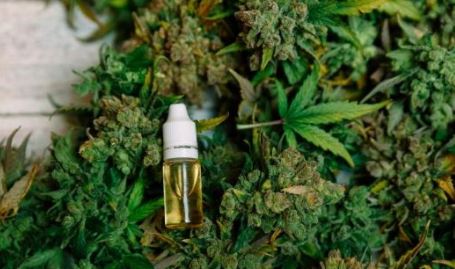
In Britain, where some doctors have recently been allowed to prescribe cannabis drugs to their patients, scientists have published a paper to better inform the general public about these products.
While in France, Prime Minister Edouard Philippe announced Friday, April 5 that he was considering the legalization of therapeutic cannabis, Britain has a head start on the subject. Since November 2018, the College of Physicians of the United Kingdom has allowed doctors to prescribe cannabis drugs to their patients. However, health professionals and patients still have very little information on this subject. To remedy this shortage, scientists from the University of Bath and the University College London published a study Saturday, April 6 highlighting different cannabis-based products in the British Medical Journal.
“In this complex and rapidly evolving field, there are different medicinal cannabis-based products that differ in their THC and CBD content, not everyone can prescribe them, and they cannot all treat the same symptoms. Here we inform in advance the professionals of the guidelines of the National Institute for Health and Care Excellence (NICE) to come, “begins Tom Freeman, from the University of Bath and lead author of the study.
The latter therefore insists on the important differences between products containing THC (Tetrahydrocannabinol, the psychotic component and main cannabis intoxicant) and those containing CBD (Cannabidiol, the non-intoxicant element of cannabis). Although in some drugs, CBD and THC are combined for therapeutic purposes, in others these compounds may function independently and have very different effects on the symptoms to be treated.
More than 144 different cannabinoids
Thus, several studies have already shown that a combination of THC and CBD can alleviate the symptoms of chronic pain while CBD alone could be effective in people resistant to epilepsy treatment. THC alone may be used to treat nausea and vomiting caused by chemotherapy.
Cannabis plants produce more than 144 different cannabinoids such as THC or CBD, says the study. In addition, some medicinal products contain THC and / or CBD derived from cannabis while others contain synthetically created cannabinoids, it is specified. CBD is also available in non-medicinal products such as oils and dyes. And, very important to know, “CBD products mainly sold on the net and in organic stores are of poor quality and should not be considered medical products,” says Tom Freeman.
“There have been major scientific shortcomings on this topic in recent years, which, combined with confusing statements about the medicinal use of these drugs, could leave doctors and their patients perplexed.We hope our new guide will help doctors and Worldwide, more research is needed on this topic, “says Dr. Michel Bloomfield of University College London, co-author of the study. “Resources must be available to keep practitioners informed about cannabis and cannabinoid treatments, and we would like to encourage physicians to maintain an emphatic and serious approach when referring patients to this area in order to deliver the most appropriate care. Qualitative possibilities “, concludes his colleague Dr Chandni Hindocha.
In France, a “therapeutic hemp industry” could be created in Creuse
If France is late compared to England on this subject, Edouard Philippe has recently returned to the front of the stage. Traveling April 5 in the Creuse, he deemed “absurd” to refrain from thinking about the legalization of cannabis for therapeutic use. “There are many countries working on this, many countries that allow it, it would be absurd not to ask the question and it is in this spirit that we want to work with the project leaders”, a- he declared in front of local elected officials.
Project that could have the Creuse as a main actor: the revitalization plan of this department eventually plans to create a “therapeutic hemp industry”, led by the President of Grand Gueret Éric Corréia, also nurse anesthetist trained in the management of pain.
Edouard Philippe’s remarks come four months after the National Agency for Drug Safety (ANSM) declared himself in favor of the use of cannabis for therapeutic purposes on the sole condition that it be reserved for “patients in certain situations, and in the case of insufficient relief or poor tolerance of therapeutic, medicinal or non-medicinal products, accessible (including cannabis or cannabinoid-based specialties available) “. To be continued…