

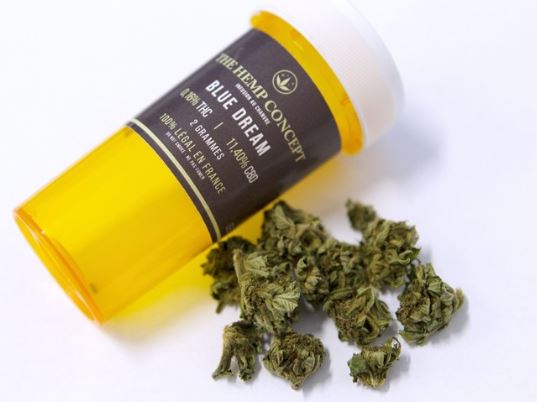
The public assistance of Marseille hospitals (AP-HM) will study the effects of therapeutic cannabis on patients suffering from this neurodegenerative pathology. The first trials, on a cohort of twenty patients, will take place at the end of the year.
Why study the effects of cannabis on this pathology?
For the first time in France, a study will look at the possible virtues of the consumption of this substance, now illegal, on the symptoms related to Parkinson’s disease. Funded by the Center of Excellence for Neurodegenerative Diseases and Aging Dhune and the France-Parkinson Association, this research will be carried out within the Public Assistance of Marseilles Hospitals (AP-HM) by the Department of Neurology and pathology of the movement, the CNRS and the Neuroscience Institute of La Timone Hospital.
“The purpose of this study is, first, to protect patients who spontaneously begin to consume,” says Olivier Blin, head of the clinical pharmacology department at Timone and pilot of the operation. They hear about multiple sclerosis or epilepsy and say, ‘Why not me?’ The problem is that we do not know the origin, the composition and the toxicity of what we self-administer in these cases. “
What are the expected effects?
This research program aims to determine how the molecules of cannabidiol (CBD) and tetrahydrocannabinol (THC) naturally contained in the plant can come to relieve patients. “We are developing the dose ranges and the optimal ratio between the two components of cannabis, the effects of which are different,” continues Professor Blin. We will have to determine whether there is a favorable risk-benefit balance. It may be in some patients, but not in others. “
The use of medical cannabis could come to relieve the motor symptoms of the disease: spasticity (neurological stiffness of neurological origin), tremors … But also its psychological consequences, more unknown, such as depression, anxiety, and disorders of the heart emotion or interaction. “We imagine that THC and CBD could have a preferential effect on these symptoms that are not relieved by the usual therapies, or even aggravated, in the form for example induced hallucinations,” he continues.
How will the experiment take place?
In the coming weeks, THC and CBD will be administered intravenously to two groups of rats, carriers of the disease for some, healthy for others. The effects noted on their motor and non-motor functions during this experimental study will be used as a basis for a clinical study on humans conducted, from the end of the year after validation by the National Security Agency of the drug (ANSM).
“It will be performed on a cohort of twenty volunteer patients, informed and already exposed to cannabis in the past,” says the professor in pharmacology. Some patients will receive a placebo, while the others will benefit from an active treatment, by inhalation, of THC and CBD of synthesis “with the determined doses and with the controlled administration”, Olivier Blin executive. All will be hospitalized for two sessions of 24 hours each. The first results of the scientific study are expected before summer 2020.