

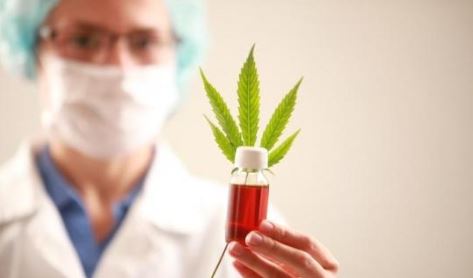
While in Annœullin, south of Lille, traders have been selling therapeutic cannabis for a few weeks, Health Minister Agnès Buzyn announced yesterday (May 24th) that therapeutic cannabis “could arrive in France”. But what are its health benefits? Update on current research
In Annœullin, south of Lille, traders have been selling therapeutic cannabis for some weeks. The marijuana products they offer (infusions, vaping liquids or oils) have no psychoactive effect. They do not contain THC, the molecule that makes cannabis a drug. “Our products have no psychoactive effect and there is no addiction, but CBD, or cannabidiol, has very beneficial effects on pathologies such as osteoarthritis”, explains Parisian Eloise Masselot. In fact, his shop is always full.
Research Update
While the Minister of Health has announced that therapeutic cannabis “could happen in France”, let us take stock of the research in this area. A recent study published in the European Journal of Internal Medicine has shown that therapeutic cannabis would actually be effective in treating pain in the elderly. 901 patients over 65 years old participated in this research. All suffered from pain related to cancer, Parkinson’s disease, post-traumatic stress, ulcerative colitis (inflammatory bowel disease), or Crohn’s disease.
Finally a first step “Ms. Buzyn The French Minister of Health is in favor of cannabis and cannabinoids in medicine” let see…
After six months of therapeutic cannabis treatment, over 93% of participants reported that their pain decreased by 4 to 8 points on a scale of 1 to 10. More than 70% of patients said they felt an overall improvement of their condition.
The scientific data are missing
Apart from this study, scientific data are missing. In the United States, where the use of therapeutic cannabis is allowed in some states, nearly half of oncologists talk about the therapeutic use of marijuana to their patients without being sufficiently informed on the subject, according to a new study published in the Journal of Clinical Oncology. 80% of oncologists surveyed said they had already discussed the issue of therapeutic cannabis with their patients, but less than 30% of them felt they had enough scientific data to make such recommendations.
“The scientific evidence supporting the use of medical marijuana in oncology is still very thin, which puts physicians in a very uncomfortable position,” says Dr. Ilana Braun of the Dana-Farber Institute of Adult Psychosocial Oncology. So far, no randomized clinical trial has looked at the effects of medical marijuana in cancer patients, apart from its effects on nausea, so that oncologists rely only on research on the use of cannabis for medical purposes in the treatment of diseases other than cancer.
Start the debate
Agnès Buzyn, health minister Agnès Buzyn said, “France has fallen behind on medical cannabis research and there is no reason to exclude cannabis to treat it. to arrive in France “, Thursday May 24th on France Inter.
She said she had launched “the debate” with the institutions responsible for drug development. “I asked the various institutions that evaluate drugs to bring me back the state of knowledge on the subject, because there is no reason to exclude, under the pretext that it is cannabis, a molecule which can be interesting for the treatment of some very debilitating pains, “she explained. And to continue: “I can not tell you how fast we will develop it but in any case, I open the debate with the institutions responsible for this development”.
The “unethical” nature of the prohibition of cannabis in a therapeutic context.
In fact, the Minister of Health is only formalizing an already open debate within France. This announcement comes after the recent referral of a patient on the “unethical” nature of the prohibition of cannabis in a therapeutic context. The Ethics and Cancer Committee should also be considering this issue soon. Currently in France, only one cannabinoid drug has a marketing authorization: Sativex, recommended against spasticity and multiple sclerosis.
Dronabinol and cannabidiol, used for patients with neuropathic pain refractory to conventional treatments or epilepsies, are accessible, but only with a temporary authorization (a procedure allowing some patients to have a drug that does not have any marketing authorization and not subject to clinical trial for this indication).