

Seedo is now starting to provide early orders that have already been received for the product: “The box contains sensors and software, and through them it visits the conditions under which the plant grows completely automatically.” The company’s share jumped 300%.
This week, the government approved the export of cannabis from Israel, and as a result, the shares of companies related to the industry jumped and were traded on the local stock exchange. In the meantime, the Israeli company Seedo, which is developing a home or agricultural system for cannabis, is also leaping in a controlled and untouched manner.
Seedo is traded on the over-the-counter market in the US at a company value of $ 32 million, after giving its investors an impressive 300% return since it merged into a stock exchange structure a month and a half ago, while raising $ 2.5 million. Yorkville was led by attorney Shmuel Yanai.
Seedo is currently starting to provide early orders that have already been received for the product, amounting to $ 5.5 million. The invitations are not just from the US, but from many countries around the world, and this moment of meeting the promises made with the product itself is very significant for companies offering “dream” preorder products, because expectations are often very high.
More expensive, more quantity
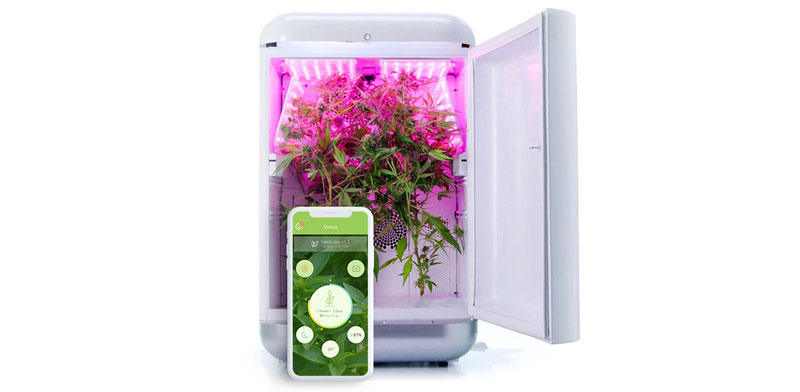
According to Zohar Levy, the company’s CEO, “We developed a device that is a kind of box that is placed in the customer’s home and connected to the Internet. The box contains sensors, including a camera that takes pictures of the plant, as well as software, and through which it controls conditions under which the plant grows completely automatically without any intervention from the customer. There is no need for pesticides, the computerized computerized management of the tumor saves water, and the tower only has to change from time to time a CO2 balloon, a water filter, an air filter and fertilizers. “
What’s in the box?
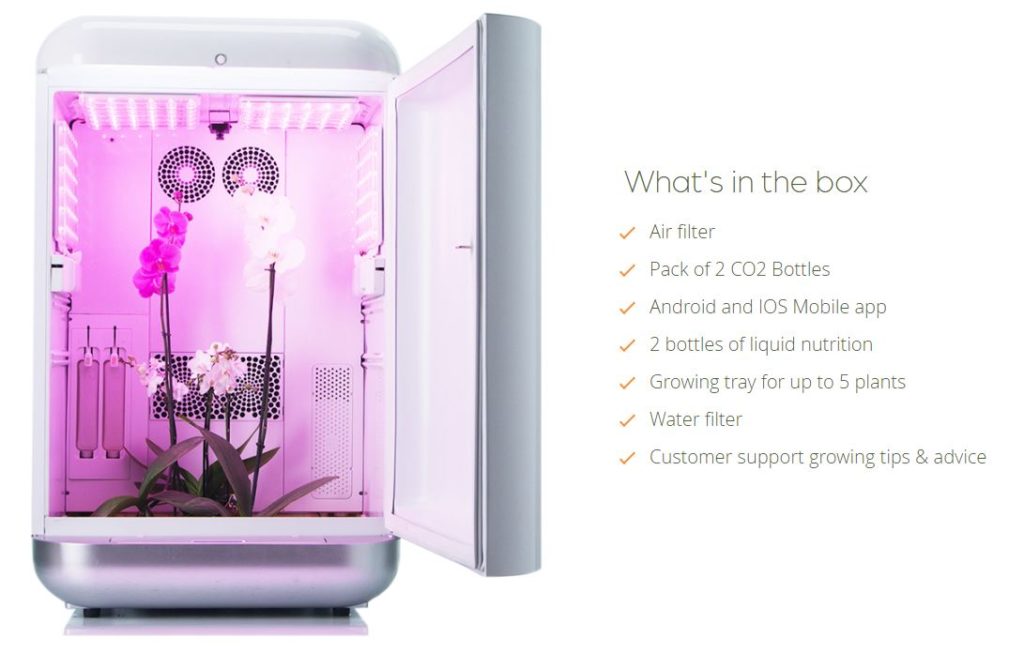
A home box costs $ 2,400 and the consumables to be replaced twice a year cost about $ 270 a quarter. So that ultimately the cost of the produce is higher than what you would pay, for example, to purchase medical cannabis at the average dose recommended for a patient in Israel. However, the quantity is also higher, and in markets that allow this – the material can be sold on. In addition, the price of the competitors is higher than abroad: “Each seedling produces 100 grams of dry flowers in 90 days, and in the US they return at least $ 10 per gram.”
Serial Production on 2020
The company began its marketing of the product to customers who are actually farmers, and not to the home market. She intends to return soon. “Cannabis of high quality must grow under controlled conditions ie in a closed place. Our growing grocery saves manpower, 6-8 people per container, and can also load the containers one on top of the other, to save space and to grow within the city. The aim is to provide such containers in production Serial until the end of 2019. “
The product is now intended for cannabis and is especially worthwhile for growing, which can also be sold dearly, but there is no reason why it should not be used in order to grow other agricultural products, such as seasoned strawberries or saffron, which is also an expensive plant. Also, consumers who care about eating organic foods and do not rely on organic-grown crops that are grown according to standards can thus fully control their growing conditions, without actually becoming farmers.
“Employees no longer perceive themselves as another screw in the system and companies have to adapt to it”
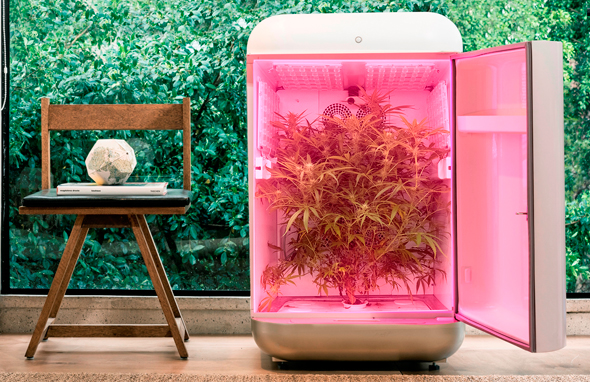
Levy: “We are working on another product for self-cultivation of a salad, which will be the size of a refrigerator, divided into cells, each of which has unique control according to the conditions required by the crop, and will adapt the crop to the consumption of the family. Instead of buying them. Our vision is that one day the refrigerator will increase all the food needed for the home itself without intervention”.
The idea of uncontrolled agricultural farming without land had gained popularity a little more than a decade ago, and then faded. “In the previous wave of this technology, it simply was not advanced enough, it took a lot of lamps to heat the plant and then air conditioners to cool the plant.

About SEEDO
Israel-based startup Seedo (incorporated as Eroll Grow Tech Ltd.) has delivered the first batch of its home cannabis farming device to customers in California and is looking to expand to markets in Africa, the company announced last week. To support its expansion, Seedo recruited former U.S. Assistant Secretary of State for African Affairs Jendayi Frazer to serve on its board.
Founded in 2013 and headquartered in northern Israeli city Haifa, Seedo develops an automated device the size of a mini-fridge that can be used to home-grow cannabis from seed to flower under controlled conditions. The device uses computer vision to analyze the state of crops and determine their needs.