

The investment house held a round of meetings with 10 publicly traded cannabis companies in Tel Aviv, and plans to invest up to NIS 30 million from members’ money. IBI: “There is an opportunity here for industry and for investors”
IBI Investment House has opened to its investors a new investment channel – the public cannabis companies in Israel – and thus becomes the first institution to invest in the field. Calcalist has learned that the IBI team met with ten public cannabis companies in Israel, among them Taste Pharma (550.0), Kanoomed (120.0) and Tapan (751.6), and that the initial total investment planned by IBI stands at NIS 30 million. In Israel there are 21 public companies in the medical cannabis sector, which are traded at a total value of NIS 3 billion, the largest of which is InterCure (1,139) traded at a value of NIS 1.2 billion. But so far, Israeli institutional investors have refused to invest in local cannabis companies until revenue and profits have been created, preferring Canadian public companies in the field, in which they invested NIS 113 million last year.
The largest Israeli institutional investor in Canadian companies is IBI, which invested NIS 101 million in 2018. For the sake of comparison, institutional investors worldwide have already invested $ 3.12 billion in the five large Canadian cannabis companies, including Canopy Growth, which is traded at a value of $ 10.92 billion, and Tilray, which is traded at a company value of $ 7.41 billion. Institutional investors in Israel invested only NIS 86.65 million in those five companies.
Ella Alkalai, VP of Business Development at the investment house and chairman of IBI Mutual Funds, told Calcalist yesterday, “We met with about 10 Israeli cannabis companies, we are studying them, and we will see where this will lead. And if the investors are there then it’s an opportunity for them, too, it’s quite rare for an investor to enter the industry in the making, and this industry is still at the seed or plant level, and it has a good chance of developing. The prospect is super interesting, and in the end, an industry will develop here, and yes, it needs time and in a way it will fluctuate and speculators.
As for the money that will flow to the Israeli cannabis companies, Alkalai says that “it depends on various things, starting with how much will be invested in the Israeli stock market, how much the Israeli public will choose to invest in Israeli shares and how quickly the regulation will issue the new guidelines that are binding on companies. The question is not about regulation but about pricing, and the approval of the law that allows companies to grow, produce and export is a drama and will allow the local industry to develop. “

Ella Alkalai, VP Business Development and Chairman of IBI Mutual Funds Alkalai, VP Business
Development and Chairman of IBI Mutual Funds
Yona Levy, a director at Tefen, one of the companies that IBI examines, told Calcalist yesterday that the medical cannabis industry is an industry that is growing in Israel and will contribute primarily to patients, but also to savers, investors in the capital market and the state. That institutional investors are diverting analysis, manpower and financial resources in favor of investment in the sector. “Tefen recently announced that it has signed agreements for the sale of medical cannabis in Israel for NIS 80 million and the establishment of medical cannabis activity in Thailand.
Unlike institutional investors, for example, Lior Yohzaf, vice president of investment at Lehman-Aldubi Gemel and pension funds, still does not think the risk is small: “The dream component is great, and as an institution I have no advantage in analyzing dreams. I may be losing a significant share, but the risk, in our opinion, is greater than the chance, “he told Calcalist.
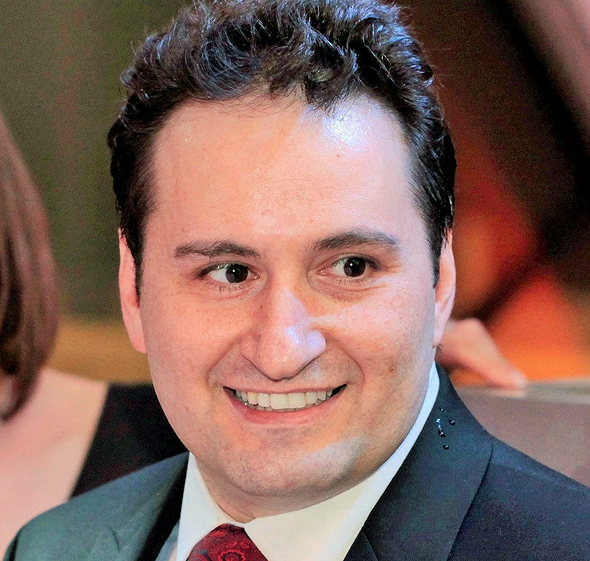
Yona Levy, Director, Public Tefen Yona Levy, Director, Public Tefen
Alkalai disagrees with this view and says that “until the export approval was a risk in the form of the regulatory question, and it was not known what the fate of the companies would be, but now that the question has been solved, the companies can reach markets in Canada, the US and most of Europe.
Regulatory risk has declined significantly, and it must be understood that such a risk is very difficult to assess, because it is difficult to know why it is confirmed or not. There is still a risk of companies that need to comply with regulation, but at least now know what the regulation is, and it will soon be possible to assess the costs of compliance. So it’s still very speculative and dangerous, as mentioned, but next to it a much more significant prospect. “
For the past decade, Israeli cannabis companies have been looking for an active and real field, which will be the next thing in the pharmaceutical world. They began recruiting former regulators, politicians, and security officials, and their shares soared to imaginary equals. The most important seal for those engaged in this field is institutional investment, such as the one IBI plans, which, in their opinion, is the standard that signals to other investors that the investment has gone through the full scrutiny of the investment houses and that investing in them is worthwhile.